
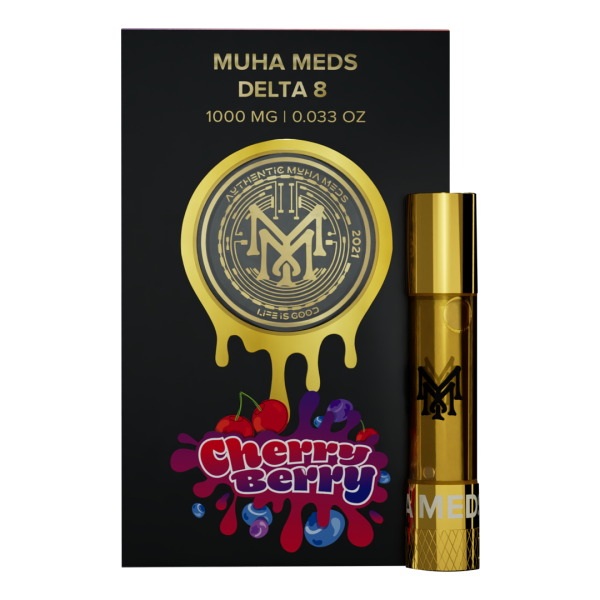
Muha Meds Cherry Berry: The Good, the Bad & What to Know
Muha Meds Cherry Berry is a 1G cartridge built around a fruit-forward profile that combines cherry-inspired sweetness with berry character. It is listed in current Muha Meds cartridge catalogs as a 1G format, while other product listings identify the formulation as an HHC cartridge.
The name gives a good indication of the overall flavor direction, but there is more to the product than simply a sweet fruit taste. Size, cannabinoid formulation, laboratory results, hardware, and puff count can all vary between versions and batches.
Product Specifications
| Detail | Information |
|---|---|
| Brand | Muha Meds |
| Product | Cherry Berry |
| Format | Pre-filled cartridge |
| Size | 1G |
| Total Content | Approximately 1000MG |
| Profile | Fruit-forward |
| Flavor Direction | Cherry and berry |
| Cannabinoid | Formulation dependent |
| Puff Count | Varies by hardware and draw length |
| Hardware | Cartridge format |
Current listings consistently identify a 1G cartridge, which is approximately 1000MG of total product by weight.
It is important to distinguish total cartridge weight from cannabinoid content. A 1000MG cartridge does not automatically mean it contains 1000MG of THC or HHC.
Cherry and Berry Flavor
The main appeal of this profile is its combination of two familiar fruit directions.
Cherry brings a recognizable sweet and slightly tart character, while berry adds a broader fruity layer. Together, they create a profile that is more rounded than a single-fruit flavor.
The flavor can be thought of in three stages:
- Cherry: Sweet, fruity, and slightly tart
- Berry: Richer mixed-fruit character
- Overall finish: Fruity with a smooth, sweet profile
This makes the product noticeably different from citrus-heavy varieties such as Agent Orange or earthy OG-style profiles.
1G / 1000MG Content
The standard cartridge listing is 1 gram, equivalent to approximately 1000MG of total cartridge contents.
That figure represents the amount of material in the cartridge rather than a guaranteed cannabinoid concentration.
Historical laboratory documentation shows why this distinction matters. A PSI Labs report for a Cherry Berry HHC cartridge recorded 87.397% HHC, equivalent to 873.97MG/g, with 87.397% total cannabinoids. The report was received in July 2023 and completed in August 2023, so it applies specifically to that tested sample.
A separate Delta-8 laboratory report for a 1G Cherry Berry cart recorded 93.8245% Δ8-THC and 96.9288% total cannabinoids.
These numbers demonstrate that different versions can have substantially different cannabinoid profiles.
Puff Count
There is no reliable universal puff count for a 1G cartridge.
The number of draws depends on factors including:
- Draw duration
- Battery voltage or temperature
- Airflow
- Cartridge hardware
- Individual usage habits
A short draw uses less oil than a long draw, so two people can get very different results from the same cartridge.
For accurate product information, it is better to state:
Puff Count: Varies by hardware and draw length.
An exact puff figure should only be used when it is provided for the specific hardware.
Cannabinoid Formulations
One of the most important details when researching this product is that the name Cherry Berry does not establish one universal cannabinoid formulation.
Historical laboratory records include several versions.
HHC Version
A PSI Labs report for a Cherry Berry cartridge identified HHC at 87.397% and total cannabinoids at the same percentage.
Delta-8 Version
Another laboratory report identified a 1G Delta-8 Cherry Berry cartridge with 93.8245% Δ8-THC and 96.9288% total cannabinoids.
Delta-10 Version
A separate report for a Delta-10 Cherry Berry cartridge recorded 89.9294% Δ10-THC and 92.8478% total cannabinoids.
These are not interchangeable specifications. They represent different formulations and testing records.
For that reason, the current package label and batch-specific COA should take priority over older online laboratory results.
What Makes This Profile Stand Out?
The biggest distinction is its fruit-forward identity.
Many cartridge profiles are built around:
- Citrus
- Diesel
- Earth
- Mint
- Tropical fruit
- Dessert flavors
This one takes a more traditional berry-and-cherry direction.
The combination provides a familiar fruit character without relying on citrus alone. That makes it easy to distinguish from sharper orange or grapefruit profiles.
The Good
There are several straightforward positives to the product format.
Distinctive Fruit Profile
Cherry and berry provide an immediately recognizable flavor direction. The combination is less one-dimensional than a single-fruit profile.
Convenient 1G Format
The 1G cartridge gives the product a clearly defined size, with approximately 1000MG of total contents.
Multiple Documented Formulations
Historical laboratory records provide useful evidence that different cannabinoid versions have existed. This can help users understand why online potency information may differ from one listing to another.
The Bad
The biggest drawback when researching older listings is inconsistent formulation information.
One source may describe an HHC version, while another laboratory record refers to Delta-8 or Delta-10. Those products should not be treated as identical simply because they share the Cherry Berry name.
Another limitation is the absence of a dependable universal puff count. Without hardware-specific testing, an exact number can easily become misleading.
Checking the Current Product
Because different formulations have existed, checking the package is particularly important.
Check the Cannabinoid
Look for the specific cannabinoid identified on the current label.
Check the Weight
The commonly listed cartridge format is 1G / approximately 1000MG.
Check the Batch
A batch or lot number can help determine whether a COA corresponds to the product being examined.
Review Laboratory Information
If a COA is available, compare the product name, batch number, cannabinoid percentages, testing date, and laboratory details.
Don’t Rely on an Old Potency Number
The historical HHC, Delta-8, and Delta-10 results demonstrate why an older number should not automatically be applied to a newer product.
Cherry Berry Compared With Other Profiles
| Profile | Main Flavor Direction |
|---|---|
| Cherry Berry | Cherry, berry, sweet fruit |
| Agent Orange | Orange, citrus, earthy |
| Cherry Grapefruit | Cherry, grapefruit, citrus |
| Gelato | Sweet, berry, creamy, earthy |
| Blueberry | Sweet berry, fruity |
| OG-style | Earthy, herbal, fuel |
The fruit combination is the defining characteristic here. It offers a different direction from citrus-heavy and fuel-forward varieties.
Frequently Asked Questions
How much product is in the cartridge?
Current listings identify the cartridge as 1G, which is approximately 1000MG of total product.
How many puffs does it have?
There is no verified universal puff count. Draw length, hardware, airflow, and battery settings can all affect consumption.
What does Cherry Berry taste like?
The profile is centered around cherry and berry fruit characteristics, giving it a sweet, fruit-forward identity.
Is it HHC or Delta-8?
That depends on the specific version. Historical laboratory documents exist for HHC, Delta-8, and Delta-10 formulations under the Cherry Berry name.
Does 1000MG mean 1000MG of HHC or THC?
No. The 1000MG figure refers to the approximate total product amount. Cannabinoid concentration must be determined from the specific formulation and laboratory results.
Why do different websites show different potency numbers?
Different websites may be referring to different formulations or older batches. Historical laboratory records show substantial differences between HHC, Delta-8, and Delta-10 versions.
Is the puff count guaranteed?
No. Unless a manufacturer provides a hardware-specific figure, puff counts should be considered variable.
Final Overview
The Cherry Berry cartridge takes a straightforward fruit-based approach, pairing cherry and berry characteristics in a compact 1G format. Current catalogs list the cartridge at 1G, or approximately 1000MG of total product.
The most important point when researching specifications is formulation. Historical testing documents show HHC, Delta-8, and Delta-10 versions with different cannabinoid results, meaning an old laboratory percentage should not automatically be presented as the specification for every current cartridge.
The puff count is also variable rather than fixed. Hardware, draw length, airflow, and battery settings all influence how quickly the oil is consumed.
For the most accurate information, use the current package label and batch-specific laboratory documentation rather than relying solely on older product listings.
Reviews
There are no reviews yet.